Brew guides
Coffee-to-water ratio: how much coffee per cup
The 1:16 golden ratio in grams, tablespoons and scoops, the right ratio for every brewer, and a calculator that does the math.
- Published
- Read time
- 6 min
- By
- Brave Pilots roasting crew
Short answer
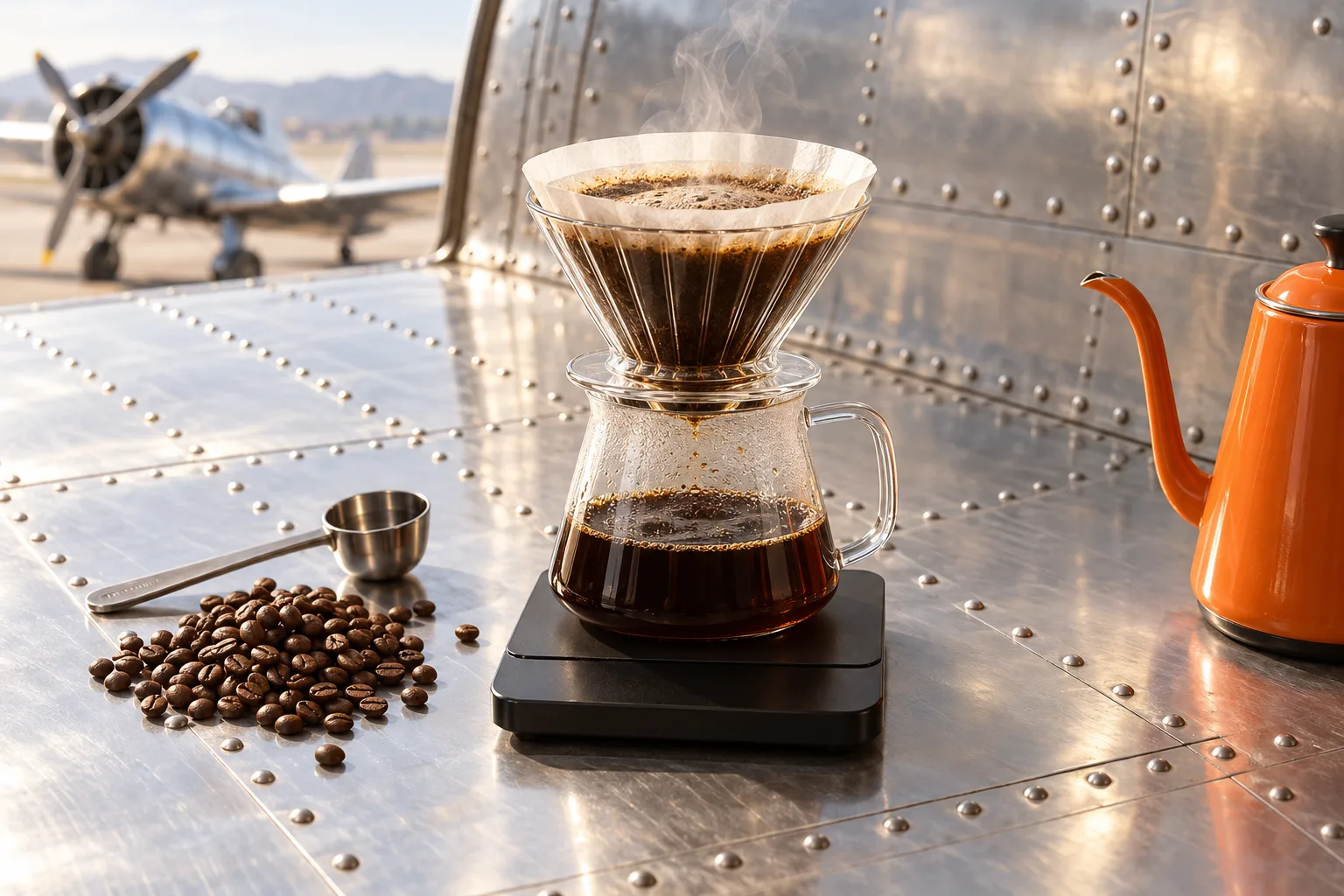
Start at 1:16. Use 1 gram of coffee for every 16 grams (16 ml) of water. That's about 15 g of coffee for an 8 oz cup, 22 g for a 12 oz mug and 62.5 g for a liter. For a stronger cup go to 1:15; for a lighter one, 1:17.
The coffee-to-water ratio is the one number that decides how strong your coffee tastes. Get it right and the same beans taste sweeter, rounder and more like themselves. Get it wrong and no grinder, kettle or filter will save the cup. Here's how to read a ratio, which one to use for every brewer, and a calculator that does the math for you.
What a coffee-to-water ratio means
A ratio of 1:16 means 1 part coffee to 16 parts water, measured by weight. Because 1 milliliter of water weighs 1 gram, you can read the water side in grams or milliliters, whichever your scale or kettle shows.
The lower the second number, the stronger the coffee:
- 1:15 is strong and full-bodied.
- 1:16 is the balanced middle most people like.
- 1:17 to 1:18 is lighter, cleaner and more tea-like.
There are two well-known reference points. The National Coffee Association's "golden ratio" is 1 to 2 tablespoons of ground coffee for every 6 ounces of water. The Specialty Coffee Association's Golden Cup standard is about 55 grams of coffee per liter of water, roughly 1:18. Most cafés brew filter coffee somewhere between 1:15 and 1:17.
Why weigh coffee instead of scooping it
A scoop measures volume, and coffee doesn't weigh the same from bag to bag. Dark roast beans lose more water in the roaster, so they're lighter and puffier: a tablespoon of dark roast can weigh noticeably less than a tablespoon of light roast. Grind size changes it too. A kitchen scale that reads to 0.1 g costs less than a few bags of coffee and takes the guesswork out of every cup. Our guide to light roast vs dark roast explains why the beans differ.
Coffee ratio calculator
Pick your brew method, enter how much water you're using and adjust the strength. The calculator gives you the coffee in grams and in level tablespoons.
Coffee ratio calculator
Coffee
22g
About 4½ level tablespoons
Water
355g
12 fl oz · 355 ml
Drip machine at 1:16
Coffee to water ratio chart by brew method
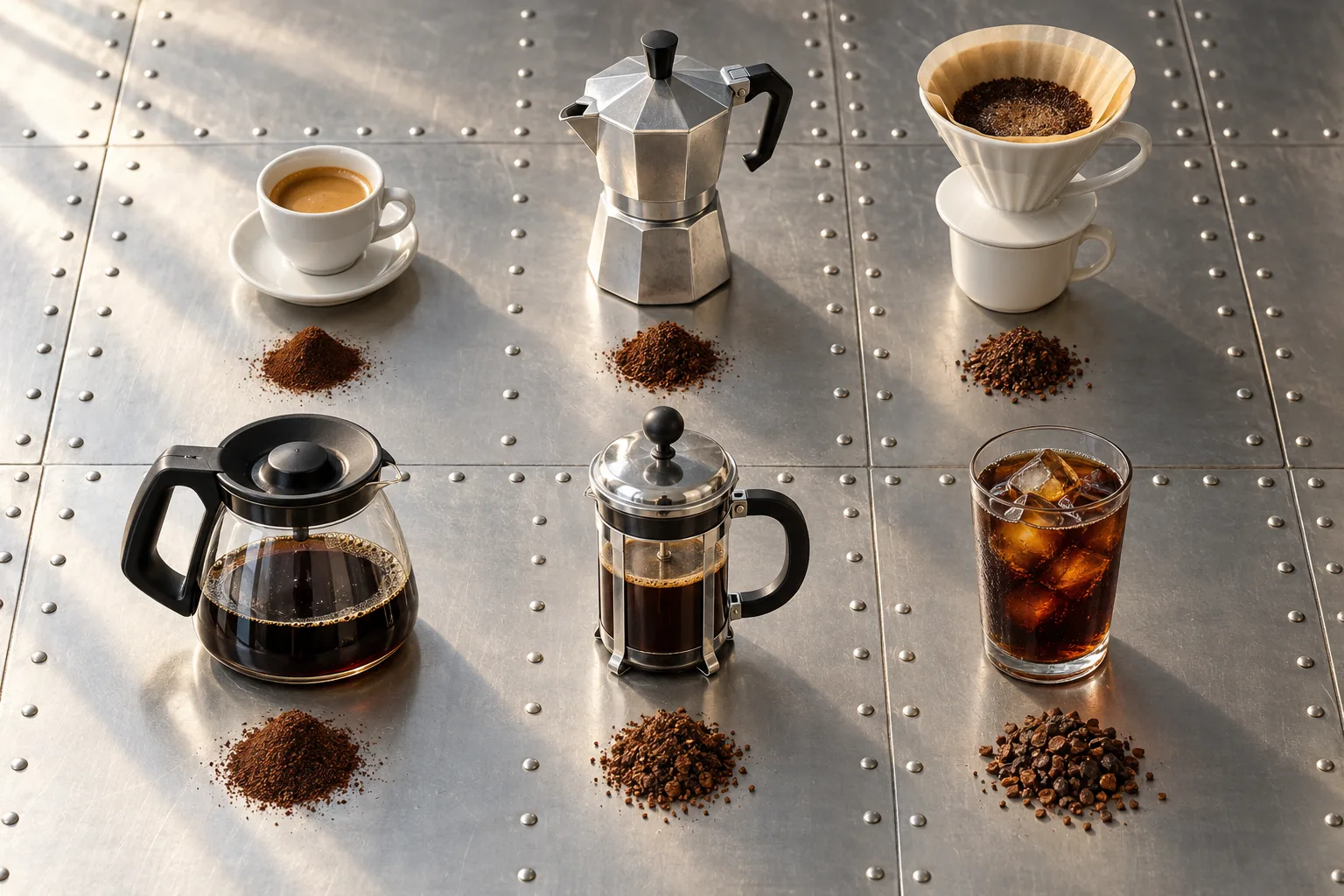
Every brewer extracts coffee differently, so each has its own sweet spot. Start with the ratio in the "Start at" line, then adjust one step at a time.
| Method | Ratio | StrongerLighter | Grind | Water | Time |
|---|---|---|---|---|---|
| Drip machine | 1:15–1:18Start at 1:16 | Medium | 195–205°F91–96°C | 5–6 min | |
| Pour-over | 1:15–1:17Start at 1:16 | Medium-fine | 200–205°F93–96°C | 3–4 min | |
| French press | 1:12–1:16Start at 1:15 | Coarse | 200°F93°C | 4 min | |
| Moka pot | 1:7–1:10Start at 1:9 | Fine to medium | Hot from the kettle | 4–5 min | |
| EspressoCoffee in to espresso out | 1:1.5–1:2.5Start at 1:2 | Fine | 195–203°F91–95°C | 25–30 s | |
| Cold brew1:4–1:5 is a concentrate; dilute it 1:1 | 1:4–1:8Start at 1:8 | Extra coarse | Cold | 12–18 h |
Drip coffee maker
Use 1:15 to 1:18 with a medium grind, and start at 1:16. A full 12-cup machine holds about 60 fl oz (1.8 liters), because a coffee-maker "cup" is only 5 to 6 ounces, so plan on roughly 100 to 110 g of coffee for a full pot. If the pot tastes thin, use more coffee rather than a finer grind, which can clog the basket.
Pour-over (V60, Kalita, Chemex)
Start at 1:16: 22 g of medium-fine coffee to 350 g of water at 200 to 205°F (93 to 96°C). Pour about twice the coffee's weight in water first and let it bloom for 30 to 45 seconds, then pour the rest in slow circles. The whole brew should take 3 to 4 minutes.
French press
Start at 1:15: 30 g of coarse coffee to 450 g of water. Steep for 4 minutes, then press slowly. French press can take a stronger ratio, down to 1:12, because its metal filter lets more oils and body through.
Moka pot
A moka pot sets its own ratio, roughly 1:7 to 1:10. Fill the basket level without tamping, about 15 to 17 g for a 3-cup pot, and fill the bottom chamber with hot water to just below the valve. Take it off the heat as soon as it starts to sputter.
Espresso
Espresso measures coffee in against espresso out. The classic is 1:2: 18 g of finely ground coffee makes 36 g of espresso in 25 to 30 seconds. A ristretto runs closer to 1:1.5 and a lungo to 1:3.
Cold brew
For a concentrate, steep at 1:4 to 1:5 and dilute it about 1:1 with water or milk. For cold brew you drink straight, steep at about 1:8. Use an extra-coarse grind, steep for 12 to 18 hours in the fridge, then strain.
How much coffee per cup
Here's the 1:16 ratio worked out for common cup sizes. Tablespoons assume about 5 g per level tablespoon of ground coffee. A standard coffee scoop is 2 tablespoons, about 10 g.
| Cup size | Water | Coffee at 1:16 | Level tablespoons |
|---|---|---|---|
| 6 fl oz (coffee-maker cup) | 177 g | 11 g | 2 |
| 8 fl oz cup | 237 g | 15 g | 3 |
| 12 fl oz mug | 355 g | 22 g | 4½ |
| 16 fl oz | 473 g | 30 g | 6 |
| 20 fl oz | 591 g | 37 g | 7½ |
| 1 liter (34 fl oz) | 1,000 g | 62.5 g | 12½ |
How to dial in your ratio
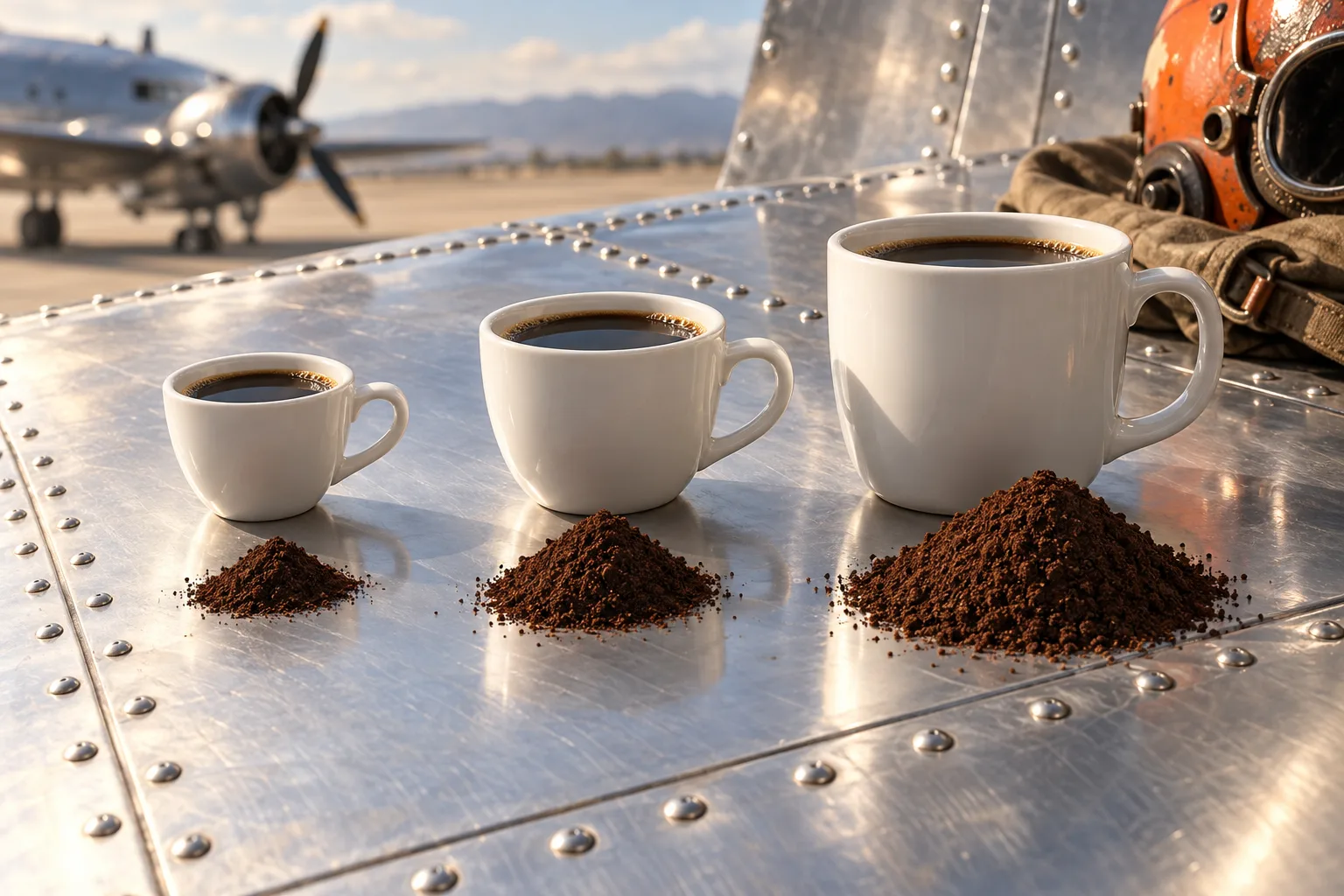
The ratio sets strength. Grind size and brew time set extraction: how much flavor the water pulls out of the coffee. Change one thing at a time:
- Too strong, heavy or harsh? Add water: move from 1:15 to 1:16 or 1:17.
- Weak or watery? Use more coffee: move from 1:17 toward 1:15.
- Sour, sharp or thin, even at a good strength? It's under-extracted. Grind a little finer or brew a little hotter.
- Bitter, dry or hollow? It's over-extracted. Grind a little coarser or shorten the brew.
Roast level matters too. Light roasts are denser and harder to extract, so they often taste best a little stronger, around 1:15, with water just off the boil. Dark roasts extract easily and can turn bitter, so try 1:16 to 1:17 with water around 195°F (90°C). Our guide to light roast vs dark roast covers the differences in detail.
Freshness beats any ratio
The perfect ratio can't rescue stale coffee. Whole beans taste best from a few days to about four weeks after roasting, and ground coffee starts losing aroma within minutes. Buy whole beans, check the roast date and grind right before you brew.
Brew with beans roasted this week
Special Roast is roasted only after you order, every Friday, at the roast level you pick, and ground for your brewer if you like. Or browse all our coffees.
Frequently asked questions
What is the golden ratio for coffee?
Most brewing guides call 1:16 to 1:18 the golden ratio: 1 gram of coffee for every 16 to 18 grams of water. The National Coffee Association suggests 1 to 2 tablespoons of ground coffee per 6 ounces of water, and the Specialty Coffee Association's Golden Cup standard is about 55 grams of coffee per liter, roughly 1:18.
How many tablespoons of coffee per cup?
For an 8 oz cup, use about 3 level tablespoons (15 g) of ground coffee. A 6 oz coffee-maker cup takes about 2 tablespoons (11 g), and a 12 oz mug about 4½ tablespoons (22 g). Weighing is more accurate, because a tablespoon of ground coffee can weigh anywhere from about 4 to 7 grams.
How much coffee do I need for 12 cups?
A 12-cup coffee maker holds about 60 fl oz (1.8 liters), because its cups are 5 ounces. At 1:16 that is about 110 g of coffee, roughly 22 level tablespoons or 11 scoops. Use about 100 g for a lighter pot.
What is the coffee-to-water ratio for French press?
Start at 1:15, for example 30 g of coarsely ground coffee to 450 g of water, and steep for 4 minutes. For a bolder, heavier cup, go as strong as 1:12.
What is the ratio for cold brew?
Brew a concentrate at 1:4 to 1:5 and dilute it about 1:1 with water or milk, or brew ready-to-drink cold brew at about 1:8. Steep extra-coarse grounds in the fridge for 12 to 18 hours, then strain.
Should I use a different ratio for light and dark roasts?
Stay in the same range, but light roasts often taste best a little stronger, around 1:15, with water just off the boil. Dark roasts extract faster and are smoother at 1:16 to 1:17 with water around 195°F (90°C).
Written by the Brave Pilots roasting crew at Brave Pilots Coffee. We roast every Friday and ship the same day.