Roast school
Light roast vs dark roast: taste, caffeine and how to choose
What roasting does to a bean, how the five roast levels taste, which one has more caffeine, and how to pick and brew yours.
- Published
- Read time
- 5 min
- By
- Brave Pilots roasting crew
Short answer
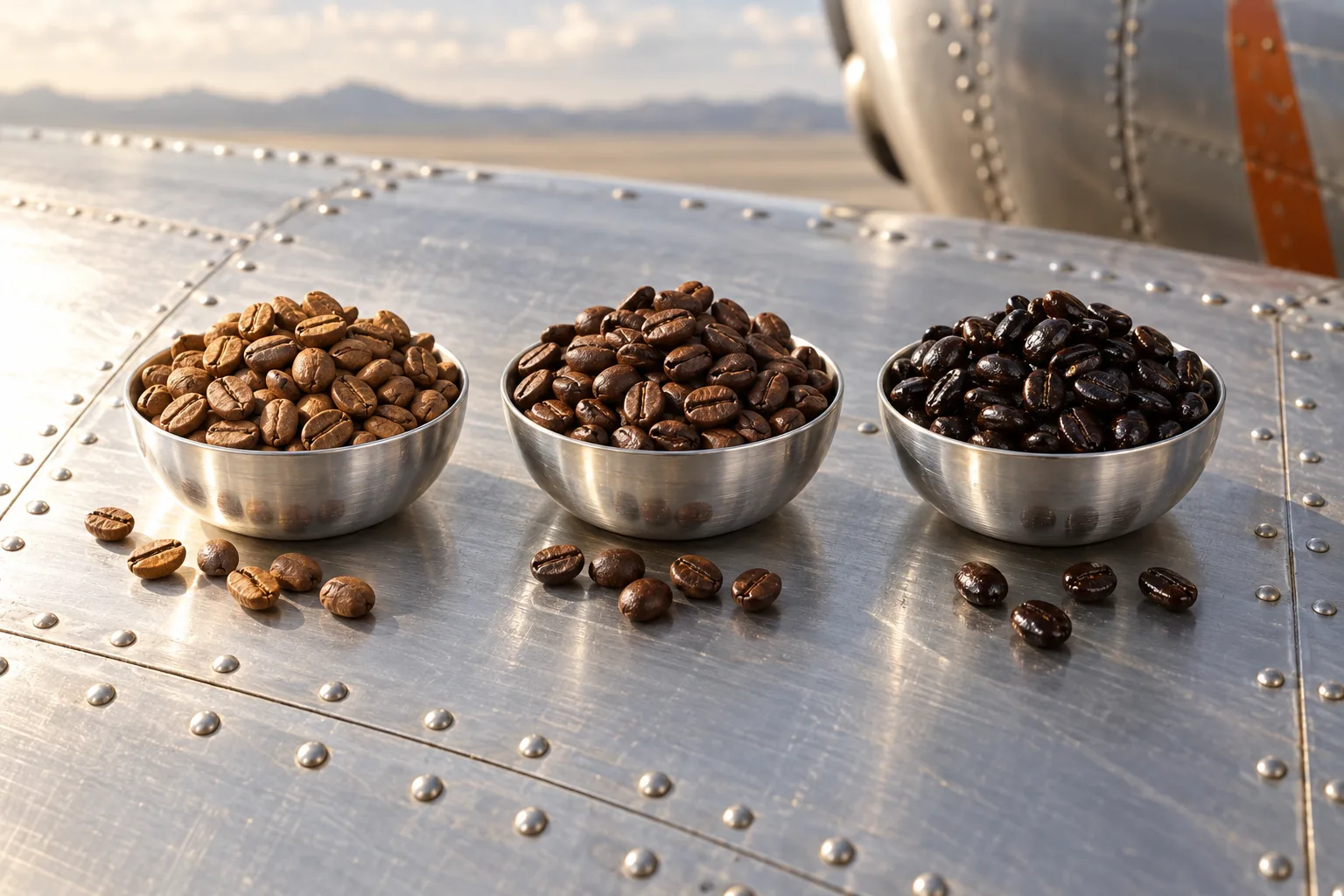
Light roast is roasted for less time. It tastes brighter, fruitier and more acidic, keeps more of the bean's origin character and has a lighter body. Dark roast is roasted longer. It tastes bolder, smokier and more bittersweet, with less acidity and a heavier body. Caffeine is about the same: a scoop of light roast has slightly more, and by weight they're nearly equal.
Walk down any coffee aisle and you'll see the same three words: light, medium and dark. They describe one thing, how long and how hot the beans were roasted, but that one choice shapes almost everything you taste in the cup. Here's what changes from light to dark, what doesn't (caffeine, mostly), and how to pick the roast that fits the way you drink coffee.
What roasting does to a coffee bean
Green coffee beans are hard, dense and grassy. They taste nothing like coffee. Roasting them for about 10 to 15 minutes at rising heat sets off hundreds of chemical reactions: sugars caramelize, the Maillard reaction builds toasty, savory flavors, and the bean's natural acids start to break down.
Two audible moments guide every roaster:
- First crack, around 385 to 400°F (196 to 205°C). Moisture turns to steam and the beans pop like popcorn. Light roasts finish shortly after.
- Second crack, around 435 to 445°F (224 to 230°C). The bean's structure starts to break down and oils rise to the surface. Dark roasts go into or past it.
Along the way the beans lose weight, mostly water: around 12% in a light roast and closer to 20% in a dark one. They also swell, so darker beans end up bigger, lighter and less dense.
The five roast levels, light to dark
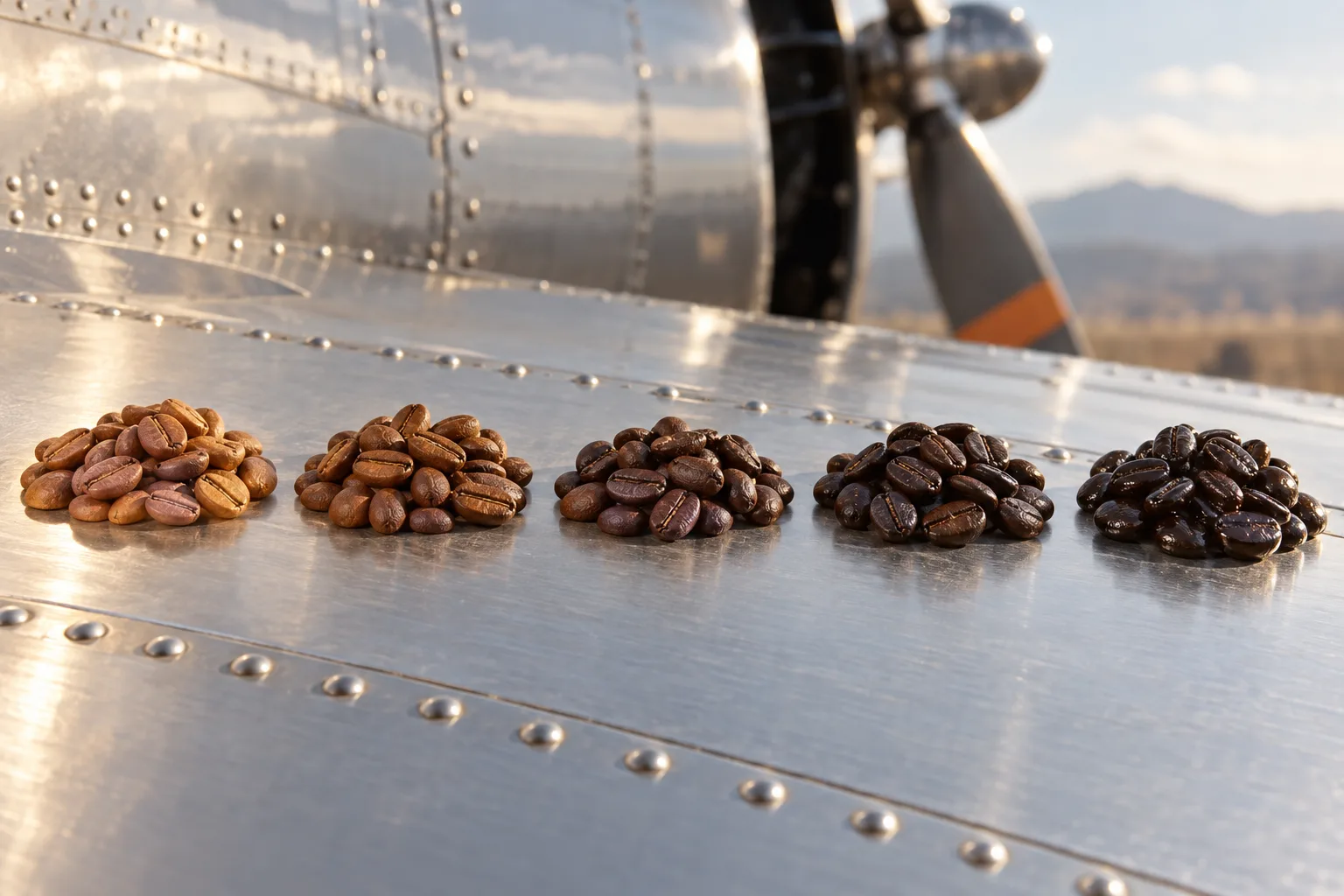
Roasters don't share one official scale, so names vary from bag to bag. We roast at five levels and call them flight levels: the darker the roast, the higher it climbs.
Light
FL100Cinnamon, New England
Bright, floral and citrusy.
395–410°F202–210°C
Acidity5 of 5Body2 of 5Blonde
FL180Light-medium, Light City
Sweet, mellow and honeyed.
410–420°F210–216°C
Acidity4 of 5Body2 of 5Medium
FL250City, American, Breakfast
Caramel, cocoa and a round body.
420–430°F216–221°C
Acidity3 of 5Body3 of 5Bold
FL310Full City, Vienna
Dark chocolate and toasted nuts.
430–445°F221–229°C
Acidity2 of 5Body4 of 5Dark
FL390French, Italian
Smoky, bittersweet and full-bodied.
445–465°F229–241°C
Acidity1 of 5Body5 of 5
Light vs medium vs dark roast at a glance
| Light roast | Medium roast | Dark roast | |
|---|---|---|---|
| Flavor | Fruity, floral, citrusy, tea-like | Caramel, milk chocolate, nutty | Smoky, bittersweet, dark chocolate |
| Acidity | High and bright | Medium | Low |
| Body | Light | Medium and round | Full and heavy |
| Origin character | Strongest | Balanced with roast flavor | Mostly roast flavor |
| Bean surface | Dry and matte | Dry | Oily and shiny |
| Caffeine per scoop | Slightly more | In between | Slightly less |
| Best for | Pour-over, filter, drinking black | Drip, espresso, everyday cups | Milk drinks, French press, cold brew |
Does dark roast have more caffeine?
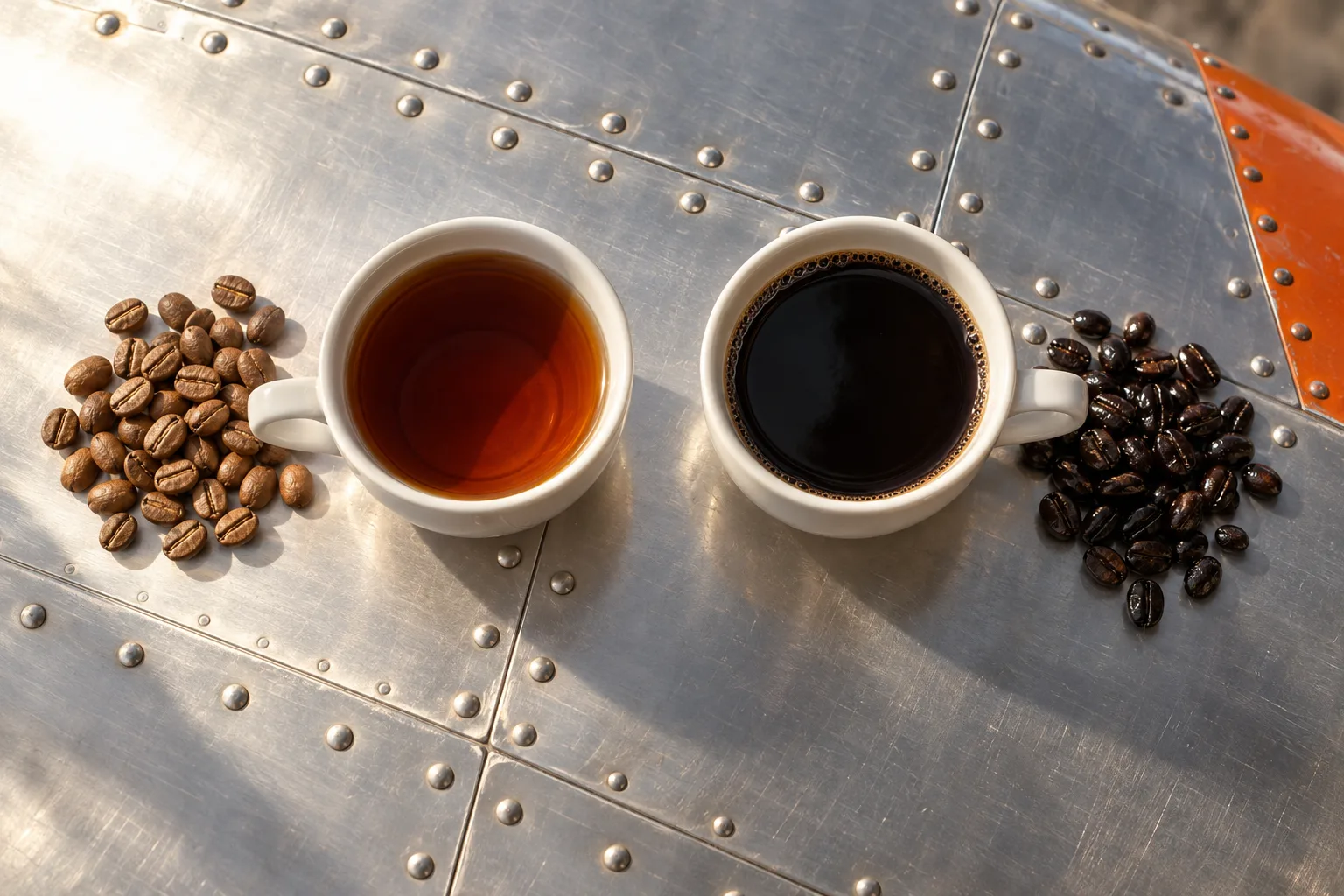
No, and it's the most common coffee myth. Dark roast tastes stronger, so it's easy to assume it has more caffeine, but bold flavor and caffeine are different things.
Caffeine holds up well to roasting heat, so a light-roasted bean and a dark-roasted bean contain about the same amount. What changes is the bean around it:
- By the scoop, light roast has slightly more caffeine. Its beans are denser, so a scoop holds more coffee.
- By weight, the two are nearly identical. Dark roast has lost more water, so a gram of it holds about the same caffeine, or a touch more.
Either way the difference is small. The coffee species matters far more: Robusta beans have roughly twice the caffeine of Arabica. So does how much coffee you use. An average 8 oz cup of brewed coffee has about 95 mg of caffeine; a single shot of espresso has about 63 mg.
Want more caffeine?
Use more coffee, not a darker roast. Going from 1:17 to 1:15 puts about 13% more coffee, and caffeine, in your cup, whatever the roast. Our coffee-to-water ratio guide shows how.
Acidity, bitterness and your stomach
Light roasts keep more of the bean's natural acids, the citric and malic acids that taste like citrus, berries and stone fruit. That brightness is what light roast fans love and what others call sour.
Roasting longer breaks those acids down and builds bitter, roasty compounds instead. That's why dark roasts taste smooth to some people and harsh to others. Dark roasts are also often easier on a sensitive stomach: early research suggests N-methylpyridinium, a compound formed during dark roasting, may reduce stomach acid production, though the evidence is still limited.
Lighter roasts also keep more chlorogenic acids, the antioxidants that long roasts break down.
How to brew light and dark roasts
- Light roast: use water just off the boil, 200 to 205°F (93 to 96°C), grind a little finer and try a slightly stronger ratio such as 1:15. Pour-over and other filter methods show off its clarity. Light roasts often taste best after resting about a week after roasting.
- Medium roast: 1:16 and 200°F work almost everywhere, from drip machines to espresso.
- Dark roast: use water around 195°F (90°C), grind a little coarser and try 1:16 to 1:17 to keep bitterness in check. It shines in French press, cold brew and espresso with milk. Its oily beans can clog some grinders and super-automatic machines, so clean them often.
How to choose your roast
Start with how you drink your coffee:
- You drink it black and love fruit or tea: Light (FL100) or Blonde (FL180). Try ATL or LAX.
- You want balance, chocolate and caramel: Medium (FL250), like ORD or AUS.
- You add milk, or like it rich and chocolatey: Bold (FL310), like JFK or SEA.
- You want the classic smoky, low-acid cup: Dark (FL390): any Special Roast origin at Dark, like Sumatra.
Still not sure? Try two roast levels of the same origin side by side. It's the fastest way to learn what you like.
Roast it your way
Special Roast lets you pick the origin and any of our five roast levels. We roast it the Friday after you order and ship it the same day.
Frequently asked questions
Does dark roast have more caffeine than light roast?
Not really. Roasting barely changes caffeine. Measured by the scoop, light roast has slightly more because its beans are denser; measured by weight, the two are nearly the same. The coffee species and how much coffee you use matter far more.
Which is stronger, light or dark roast?
Dark roast tastes stronger because of its bold, bitter, roasty flavor and heavier body, but it isn't higher in caffeine. To make coffee stronger in both taste and caffeine, use more coffee per cup.
Is light roast more acidic than dark roast?
Yes. Light roasts keep more of the bean's natural acids, which taste bright and fruity. Longer roasting breaks many of them down, so dark roasts taste less acidic and are often gentler on sensitive stomachs.
What is blonde roast coffee?
Blonde roast is a light-to-medium roast, taken a little further than a light roast. It's sweet and mellow, with softer acidity than a true light roast. On our scale it's FL180, between Light and Medium.
What roast is best for espresso?
Medium to medium-dark roasts are the classic espresso choice because they're sweet, chocolatey and forgiving. Light roasts make bright, fruity espresso but need a finer grind, hotter water and more practice.
Why are dark roast beans oily?
Long roasting breaks down the bean's cell walls and pushes oils to the surface, usually after second crack. Oily beans are normal for a dark roast and not a sign of spoilage, but they can clog some grinders and super-automatic machines.
Written by the Brave Pilots roasting crew at Brave Pilots Coffee. We roast every Friday and ship the same day.